Quiet Reads
The Women of Ramayana — Sita, Sarama, Surpanakha and Mandodari
By Sarmishtha Parida
A reflection on the women of Ramayana, the consequences of wounded egos, and what their stories ask of us about compassion, boundaries and equality.
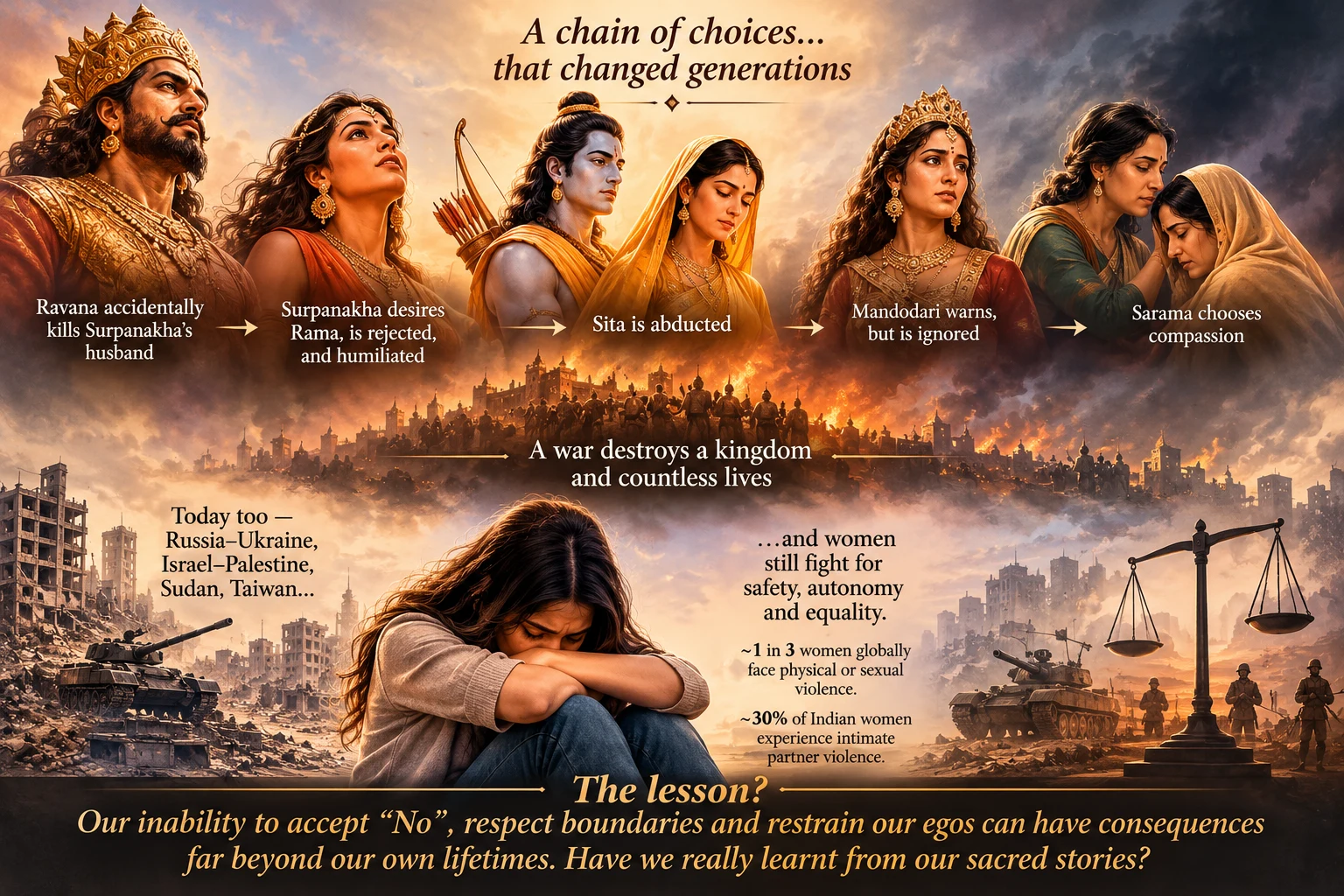
A war that lasted years, destroyed a kingdom and cost countless lives. Yet its origins lay in a chain of personal losses, wounded egos, rejection, revenge and an inability to respect boundaries.
Ravana accidentally killed Surpanakha’s husband, Vidyujjihva, during a military campaign. His widowed sister was sent to live in the Dandaka forest under the protection of their brother Khara. Surpanakha, described in some retellings as beautiful and intelligent, was already paying the price of her brother’s actions. When she encountered Rama, she expressed her attraction. Was she wrong to desire someone? Rama, married to Sita, directed her towards Lakshmana, who also rejected her and sent her back to Rama. When she threatened Sita, Lakshmana cut off her nose and ears. Humiliated, she sought revenge. After Rama killed Khara and Dushana, she approached Ravana, whose desire for Sita led to her abduction through Maricha’s deception. Mandodari warned Ravana, but he refused to listen. Sarama, meanwhile, chose compassion over allegiance and secretly supported Sita in captivity.
What followed was a devastating war and the destruction of Lanka. Look at the world today: Russia–Ukraine, Israel–Palestine, Sudan and tensions over Taiwan. Different histories, but power, territory and control remain recurring themes. Women, too, continue to fight for safety, autonomy and equality. In India, nearly 30% of ever-married women aged 15–49 have experienced intimate partner violence. Globally, nearly one in three women has experienced physical or sexual violence.
The lesson? Our inability to accept No, respect boundaries and restrain our egos can have consequences far beyond our own lifetimes. Surpanakha, Sita, Mandodari and Sarama represent different experiences of women navigating power, rejection and injustice. Thousands of years later, we still tell their stories, but continue to repeat many of the same patterns. Have we really learnt from our sacred texts, or have we simply learnt to worship them? This Diwali when you light the Diya, do you want to retrain your belief systems?